Skip to Main Content

Finding Books
When looking for a book or eBook, use the search bar on The New School Libraries website
Some tips & tricks for searching are:
-
Simple Search results contain all the words used. These may match words in a title, author names, subjects, abstract, or other fields.
-
Advanced Search pre-limits a search to specific fields, material types, and publication dates
-
The asterisk (*) can be truncate a word. [octop* = octopuses, octopi, octopods, octopodes]
-
Enclosing a search in quotes (" ") returns results that are an exact match ["happy birthday"].
-
Boolean Logic is supported.- Use precision search queries such as AND, OR and NOT.
-
"honey bee communication" – the library catalog treats the entire query as an exact phrase.
-
'"Honey bee" AND communication' will garner results with the phrase "honey bee" and the word communication, but not as a phrase.
-
'"Honey bee" OR communication' will show all results with the phrase "honey bee," all results with the word 'communication,' and all results with both.
-
'Programmers NOT php' retrieves all items which have the word 'programmers', but will filter/remove results containing the term 'php'.
To look for a specific book, go to The New School Libraries website & type in the title of the book in the search bar.

If available, you will find your book on the results page.

Click on the title of the edition you want to find to learn which library the book is in, to see if it's available electronically, or to request it from another library.

To browse for books in the library catalog, go to The New School Libraries website & type the subject you would like to study in the search bar.

On the results page, you'll find books, articles, audio, video, and much more related to your subject.

On the left-hand side, you can narrow down your results by topics such as resource type, library location, subject, author, date, and more.


Most books on Graphic & Communication Design are located at the University Center library.
Graphic Design - NC997-998
American Graphic Design - NC998.5
Foreign Graphic Design - NC998.6
Graphic Designers - NC998.6
Typography and Print Design - Z244-246
Bookbinding - Z266-270
Color in Design - NK1548
Design Patterns and Motifs - NK1390-1476, 1530-1560
Design Theory and Writing - NK1505-1520
Information Design - NK1510
Motion Graphics - NC997, TR897.7
Note: there are more books available offsite! Look in the Library Catalog for more.
There are multiple ways to get a book if we do not have it at The New School Libraries:
-
Some of our books are labeled as Offsite. Offsite books are kept just outside the city & can be delivered to The New School library of your choice in just 1-2 days. Place a Hold on these materials by going to the book's catalog page, logging in, clicking on the 'Offsite' listing, and clicking 'Hold.'
-
Does the catalog say it's available at NYU or Cooper Union? We are 'in consortium' with them, which means that you can check out books from their libraries! Your New School ID card gets you in the door & acts as your library card.
-
You can request a book through EZ Borrow, and it will arrive at The New School library of your choice in 3-5 days. You can check out this book for 16 weeks. To do this, you can 'Request a Physical Copy' on a book's catalog page.
-
You may have heard about Interlibrary Loan (ILL) from your local public library or high school. We are happy to facilitate ILL requests for you, but please keep in mind that they make take 2-8 weeks to arrive, and the checkout period is at the discretion of the lending library.
Recommended Books
-
 A Century of Graphic Design
by
Jeremy Aynsley
The twentieth century was a landmark era in graphic design, the art that combines words with graphic images on posters, book and magazine covers, record jackets, billboards, and other print advertising and publicity media. This visually magnificent and factually informative volume tells the story of graphic design, then gives separate illustrated thumbnail biographies of more than 100 of the most influential and internationally known designers of the past 100 years. From the century's early decades we find artists' profiles and reproductions from the studios of Peter Behrens, Alexander Rodchenko, the Bauhaus, Laszlo Moholy-Nagy, a sampling of Art Deco, and much more. Examples of Mid-Century Modern include Lester Beall, Yusaku Kamekura, and jazz record covers from various sources. The Pop and Alternative Art eras gave us psychedelic graphics, militant socialist posters from Cuba, and the dramatic typographic designs of Herb Lubalin. Design in the Digital Era has included work by David Carson, Javier Mariscal, Eiko Ishioka, and many others. All illustrations are perfectly reproduced on high quality paper. The text was written by Jeremy Aynsley, an internationally recognized authority in the art of graphic design. Approximately 450 brilliant full-color photos and illustrations.
A Century of Graphic Design
by
Jeremy Aynsley
The twentieth century was a landmark era in graphic design, the art that combines words with graphic images on posters, book and magazine covers, record jackets, billboards, and other print advertising and publicity media. This visually magnificent and factually informative volume tells the story of graphic design, then gives separate illustrated thumbnail biographies of more than 100 of the most influential and internationally known designers of the past 100 years. From the century's early decades we find artists' profiles and reproductions from the studios of Peter Behrens, Alexander Rodchenko, the Bauhaus, Laszlo Moholy-Nagy, a sampling of Art Deco, and much more. Examples of Mid-Century Modern include Lester Beall, Yusaku Kamekura, and jazz record covers from various sources. The Pop and Alternative Art eras gave us psychedelic graphics, militant socialist posters from Cuba, and the dramatic typographic designs of Herb Lubalin. Design in the Digital Era has included work by David Carson, Javier Mariscal, Eiko Ishioka, and many others. All illustrations are perfectly reproduced on high quality paper. The text was written by Jeremy Aynsley, an internationally recognized authority in the art of graphic design. Approximately 450 brilliant full-color photos and illustrations.
Publication Date: 2001
-
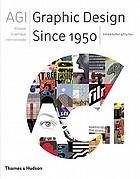 AGI: Graphic Design since 1950
by
Ben Bos; Elly Bos
AGI (Alliance Graphique Internationale) was founded in 1951 by a small, select group of French and Swiss graphic designers. Since then AGI has invited some 600 designers from more than thirty countries to join its ranks.Together the members of AGI have written a significant part of the history of graphic design since the mid-twentieth century. This book tells the story of their accomplishments through a series of richly illustrated biographies, plus essays by prominent AGI members on past and present developments in visual communication.The designers featured here include Alan Fletcher, Saul Bass, Paul Rand, Roman Cieslewicz, Ivan Chermayeff, Tom Geismar, Seymour Chwast, April Greiman, Yusaku Kamakura, Milton Glaser, Adrian Frutiger, Tibor Kalman, and hundreds more.
AGI: Graphic Design since 1950
by
Ben Bos; Elly Bos
AGI (Alliance Graphique Internationale) was founded in 1951 by a small, select group of French and Swiss graphic designers. Since then AGI has invited some 600 designers from more than thirty countries to join its ranks.Together the members of AGI have written a significant part of the history of graphic design since the mid-twentieth century. This book tells the story of their accomplishments through a series of richly illustrated biographies, plus essays by prominent AGI members on past and present developments in visual communication.The designers featured here include Alan Fletcher, Saul Bass, Paul Rand, Roman Cieslewicz, Ivan Chermayeff, Tom Geismar, Seymour Chwast, April Greiman, Yusaku Kamakura, Milton Glaser, Adrian Frutiger, Tibor Kalman, and hundreds more.
Publication Date: 2007
-
 Atlas of Graphic Designers
by
Elena Stanic; Lipavsky Corina
This comprehensive collection illustrates the world of graphic design country by country, featuring the best graphic designers from all over the world. An amazing reference, this book provides insight into how designers from varied backgrounds approach their work, how different cultures associate communication and creativity in different ways, and how we see this reality used, pushed to its limits, and even completely transformed by design. No matter where you are from, this book will leave you with a broadened awareness of your own visual taste and an in-depth, contextual understanding of graphic design worldwide.
Atlas of Graphic Designers
by
Elena Stanic; Lipavsky Corina
This comprehensive collection illustrates the world of graphic design country by country, featuring the best graphic designers from all over the world. An amazing reference, this book provides insight into how designers from varied backgrounds approach their work, how different cultures associate communication and creativity in different ways, and how we see this reality used, pushed to its limits, and even completely transformed by design. No matter where you are from, this book will leave you with a broadened awareness of your own visual taste and an in-depth, contextual understanding of graphic design worldwide.
Publication Date: 2009
-
 The Bloomsbury Encyclopedia of Design
by
Clive Edwards (Editor)
A Choice Outstanding Academic Title 2016The Bloomsbury Encyclopedia of Design provides a comprehensive guide to design, with entries on key topics in the history and theory of design, addressing a range of design forms including graphic, textile, furniture, metal, ceramic, fashion, stage and film, vehicle and product design, as well as national histories of design and key design movements.The Encyclopedia provides up-to-date peer reviewed coverage of the last 250 years of design history, with global coverage by leading international design scholars and design historians. Complete with a comprehensive index and full cross referencing, The Bloomsbury Encyclopedia of Design is the definitive guide to Design.
The Bloomsbury Encyclopedia of Design
by
Clive Edwards (Editor)
A Choice Outstanding Academic Title 2016The Bloomsbury Encyclopedia of Design provides a comprehensive guide to design, with entries on key topics in the history and theory of design, addressing a range of design forms including graphic, textile, furniture, metal, ceramic, fashion, stage and film, vehicle and product design, as well as national histories of design and key design movements.The Encyclopedia provides up-to-date peer reviewed coverage of the last 250 years of design history, with global coverage by leading international design scholars and design historians. Complete with a comprehensive index and full cross referencing, The Bloomsbury Encyclopedia of Design is the definitive guide to Design.
Publication Date: 2015
-
 The Design Encyclopedia
by
Terence Riley (Editor); Mel Byars (Text by)
The Museum of Modern Art Design Encyclopedia is the most comprehensive design reference guide to date. Compiled over the last 15 years by Mel Byars, in consultation with an international team of design experts, The Encyclopedia sets out to provide the factual framework of a discipline whose own historical accounting of itself is still relatively young. (By way of contrast, art history has existed as a scholarly discipline for over two centuries, and has produced a fairly comprehensive record of itself in that time period.) Only once before has a similarly comprehensive overview of the history of design been attempted--in 1994, also by Mel Byars. The Encyclopedia is about design, of course, but these days "design" seems to encompass almost everything, from magazine layouts and sweatshirts to animatronic flower gardens and heart pumps, not to mention the more abstract "information design." Here, however, design is considered only in its concrete application to functional objects, thus crossing with craft, decorative arts, and industrial design, but distinguishing itself from fine art and theory. The result is 832 pages covering the last 130 years in the history of the design of furniture, lighting, fabrics, ceramics, glassware, metalware, objects in a range of other materials, and mechanical, electrical and electronic appliances, as well as automobiles and some inventions. There are separate entries for designers and craftspeople, design studios, consortiums and partnerships, noteworthy manufacturers, significant historical periods and styles, and materials. Entries, 3,600 in all, are self-contained and organized alphabetically, and include cross-references. Information is an amalgamation of data gathered from a vast number of primary and secondary sources. With over 700 full-color illustrations, most of which are drawn from the MoMA collection, the remainder from Quittenbaum Kunstauktionen in Munich and Hamburg or directly from designers or manufacturers, this publication is an invaluable, definitive compendium of the world of design over the last century and a half.
The Design Encyclopedia
by
Terence Riley (Editor); Mel Byars (Text by)
The Museum of Modern Art Design Encyclopedia is the most comprehensive design reference guide to date. Compiled over the last 15 years by Mel Byars, in consultation with an international team of design experts, The Encyclopedia sets out to provide the factual framework of a discipline whose own historical accounting of itself is still relatively young. (By way of contrast, art history has existed as a scholarly discipline for over two centuries, and has produced a fairly comprehensive record of itself in that time period.) Only once before has a similarly comprehensive overview of the history of design been attempted--in 1994, also by Mel Byars. The Encyclopedia is about design, of course, but these days "design" seems to encompass almost everything, from magazine layouts and sweatshirts to animatronic flower gardens and heart pumps, not to mention the more abstract "information design." Here, however, design is considered only in its concrete application to functional objects, thus crossing with craft, decorative arts, and industrial design, but distinguishing itself from fine art and theory. The result is 832 pages covering the last 130 years in the history of the design of furniture, lighting, fabrics, ceramics, glassware, metalware, objects in a range of other materials, and mechanical, electrical and electronic appliances, as well as automobiles and some inventions. There are separate entries for designers and craftspeople, design studios, consortiums and partnerships, noteworthy manufacturers, significant historical periods and styles, and materials. Entries, 3,600 in all, are self-contained and organized alphabetically, and include cross-references. Information is an amalgamation of data gathered from a vast number of primary and secondary sources. With over 700 full-color illustrations, most of which are drawn from the MoMA collection, the remainder from Quittenbaum Kunstauktionen in Munich and Hamburg or directly from designers or manufacturers, this publication is an invaluable, definitive compendium of the world of design over the last century and a half.
Publication Date: 2004
-
 Thinking through Graphic Design History : Challenging the canon
by
Toppins, Aggie
Graphic design has a paradoxical relationship to history. While it claims to promote originality and innovation - ideas that emphasize the new and unique - design practice is deeply embedded in previous ideals. Too often, design students encounter the past in brief visual impressions which seduce them to imitate form rather than engage with historical contexts. Even though it has claimed to be objective and even comprehensive, graphic design history has focused largely on individual careers and Eurocentric achievements. Yet the past swells with untapped potential. Graphic design history can serve the field of today and tomorrow, but its narratives require updates. History, like design, is always changing and like design, history is driven by present-day questions. This book shows how students and practicing designers can enrich their work by thinking historically about design. With thoughtful analyses, stimulating creative prompts, inspiring case studies, and perspectives from designers all over the world, this book challenges our traditional understanding of graphic design history, and the very notion of the design canon, offering ways to shape socially engaged, critical practices.
Thinking through Graphic Design History : Challenging the canon
by
Toppins, Aggie
Graphic design has a paradoxical relationship to history. While it claims to promote originality and innovation - ideas that emphasize the new and unique - design practice is deeply embedded in previous ideals. Too often, design students encounter the past in brief visual impressions which seduce them to imitate form rather than engage with historical contexts. Even though it has claimed to be objective and even comprehensive, graphic design history has focused largely on individual careers and Eurocentric achievements. Yet the past swells with untapped potential. Graphic design history can serve the field of today and tomorrow, but its narratives require updates. History, like design, is always changing and like design, history is driven by present-day questions. This book shows how students and practicing designers can enrich their work by thinking historically about design. With thoughtful analyses, stimulating creative prompts, inspiring case studies, and perspectives from designers all over the world, this book challenges our traditional understanding of graphic design history, and the very notion of the design canon, offering ways to shape socially engaged, critical practices.
Publication Date: 2025
-
 Microinteractions
by
Saffer, Dan.
It’s the little things that turn a good digital product into a great one. With this full color practical book, you’ll learn how to design effective microinteractions: the small details that exist inside and around features. How can users change a setting? How do they turn on mute, or know they have a new email message? Through vivid, real-world examples from today’s devices and applications, author Dan Saffer walks you through a microinteraction’s essential parts, then shows you how to use them in a mobile app, a web widget, and an appliance. You’ll quickly discover how microinteractions can change a product from one that’s tolerated into one that’s treasured. Explore a microinteraction’s structure: triggers, rules, feedback, modes, and loops Learn the types of triggers that initiate a microinteraction Create simple rules that define how your microinteraction can be used Help users understand the rules with feedback, using graphics, sounds, and vibrations Use modes to let users set preferences or modify a microinteraction Extend a microinteraction’s life with loops, such as “Get data every 30 seconds”
Microinteractions
by
Saffer, Dan.
It’s the little things that turn a good digital product into a great one. With this full color practical book, you’ll learn how to design effective microinteractions: the small details that exist inside and around features. How can users change a setting? How do they turn on mute, or know they have a new email message? Through vivid, real-world examples from today’s devices and applications, author Dan Saffer walks you through a microinteraction’s essential parts, then shows you how to use them in a mobile app, a web widget, and an appliance. You’ll quickly discover how microinteractions can change a product from one that’s tolerated into one that’s treasured. Explore a microinteraction’s structure: triggers, rules, feedback, modes, and loops Learn the types of triggers that initiate a microinteraction Create simple rules that define how your microinteraction can be used Help users understand the rules with feedback, using graphics, sounds, and vibrations Use modes to let users set preferences or modify a microinteraction Extend a microinteraction’s life with loops, such as “Get data every 30 seconds”
Publication Date: 2013
-
 Meggs' History of Graphic Design 6th Ed.
by
Philip B. Meggs; Alston W. Purvis
The bestselling graphic design reference, updated for the digital age Meggs' History of Graphic Design is the industry's unparalleled, award-winning reference. With over 1,400 high-quality images throughout, this visually stunning text guides you through a saga of artistic innovators, breakthrough technologies, and groundbreaking developments that define the graphic design field. The initial publication of this book was heralded as a publishing landmark, and author Philip B. Meggs is credited with significantly shaping the academic field of graphic design. Meggs presents compelling, comprehensive information enclosed in an exquisite visual format. The text includes classic topics such as the invention of writing and alphabets, the origins of printing and typography, and the advent of postmodern design. This new sixth edition has also been updated to provide: The latest key developments in web, multimedia, and interactive design Expanded coverage of design in Asia and the Middle East Emerging design trends and technologies Timelines framed in a broader historical context to help you better understand the evolution of contemporary graphic design Extensive ancillary materials including an instructor's manual, expanded image identification banks, flashcards, and quizzes You can't master a field without knowing the history. Meggs' History of Graphic Design presents an all-inclusive, visually spectacular arrangement of graphic design knowledge for students and professionals. Learn the milestones, developments, and pioneers of the trade so that you can shape the future.
Meggs' History of Graphic Design 6th Ed.
by
Philip B. Meggs; Alston W. Purvis
The bestselling graphic design reference, updated for the digital age Meggs' History of Graphic Design is the industry's unparalleled, award-winning reference. With over 1,400 high-quality images throughout, this visually stunning text guides you through a saga of artistic innovators, breakthrough technologies, and groundbreaking developments that define the graphic design field. The initial publication of this book was heralded as a publishing landmark, and author Philip B. Meggs is credited with significantly shaping the academic field of graphic design. Meggs presents compelling, comprehensive information enclosed in an exquisite visual format. The text includes classic topics such as the invention of writing and alphabets, the origins of printing and typography, and the advent of postmodern design. This new sixth edition has also been updated to provide: The latest key developments in web, multimedia, and interactive design Expanded coverage of design in Asia and the Middle East Emerging design trends and technologies Timelines framed in a broader historical context to help you better understand the evolution of contemporary graphic design Extensive ancillary materials including an instructor's manual, expanded image identification banks, flashcards, and quizzes You can't master a field without knowing the history. Meggs' History of Graphic Design presents an all-inclusive, visually spectacular arrangement of graphic design knowledge for students and professionals. Learn the milestones, developments, and pioneers of the trade so that you can shape the future.
Publication Date: 2016
-
 Graphic Design
by
Stephen J. Eskilson
Instructors: Please note that a third edition of Graphic Design will be available soon. Stock of the second edition should be available to fill orders for summer and fall 2019 classes; beyond fall 2019, please anticipate switching to the third edition. Go to the web page for Graphic Design's third edition to learn more or to request an examination copy. Now in its second edition, this innovative look at the history of graphic design explores its evolution from the 19th century to the present day. Author Stephen J. Eskilson demonstrates how a new era began for design arts under the influence of Victorian reformers, tracing the emergence of modernist design styles in the early 20th century, and examining the wartime politicization of regional styles. Richly contextualized chapters chronicle the history of the Bauhaus and the rise of the International Style in the 1950s and '60s, and the postmodern movement of the 1970s and '80s. The book's final chapter looks at current trends in graphic design, with in-depth discussions of grunge, comic book, and graffiti aesthetics; historicism and appropriation; and the influence of technology, web design, and motion graphics. The second edition features over 80 new images, revised text throughout, a new chapter on 19th-century design, and expanded sections on critical topics including the Swiss Style, Postmodernism, and contemporary design.
Graphic Design
by
Stephen J. Eskilson
Instructors: Please note that a third edition of Graphic Design will be available soon. Stock of the second edition should be available to fill orders for summer and fall 2019 classes; beyond fall 2019, please anticipate switching to the third edition. Go to the web page for Graphic Design's third edition to learn more or to request an examination copy. Now in its second edition, this innovative look at the history of graphic design explores its evolution from the 19th century to the present day. Author Stephen J. Eskilson demonstrates how a new era began for design arts under the influence of Victorian reformers, tracing the emergence of modernist design styles in the early 20th century, and examining the wartime politicization of regional styles. Richly contextualized chapters chronicle the history of the Bauhaus and the rise of the International Style in the 1950s and '60s, and the postmodern movement of the 1970s and '80s. The book's final chapter looks at current trends in graphic design, with in-depth discussions of grunge, comic book, and graffiti aesthetics; historicism and appropriation; and the influence of technology, web design, and motion graphics. The second edition features over 80 new images, revised text throughout, a new chapter on 19th-century design, and expanded sections on critical topics including the Swiss Style, Postmodernism, and contemporary design.
Publication Date: 2012
-
 Typography and Graphic Design
by
Roxanne Jubert; Ellen Lupton (Foreword by); Deke Dusinberre (Translator); David Radzinowicz (Translator); Serge Lemoine (Foreword by)
This chronological study traces the evolution of graphic form, from Antiquity through the Middle Ages and up through the age of technology. Each period is explained in detail, from Classical craftsmanship to the changes brought on by the Industrial Revolution and the modern-day potential of the digital world. As computers now play an integral role in academic and professional environments, virtually everyone makes font choices on a regular basis, rendering typography more relevant than ever before. This thorough, scholarly, and visually-appealing volume combines the history of the letter form--from the invention of printing to the relationship between graphics and totalitarian regimes--with intricate analysis of graphic design and typography, all supported by 850 images with extensive notes and a bibliography. This is an indispensable handbook for understanding our daily visual environment, and essential reading for all graphic arts professionals.
Typography and Graphic Design
by
Roxanne Jubert; Ellen Lupton (Foreword by); Deke Dusinberre (Translator); David Radzinowicz (Translator); Serge Lemoine (Foreword by)
This chronological study traces the evolution of graphic form, from Antiquity through the Middle Ages and up through the age of technology. Each period is explained in detail, from Classical craftsmanship to the changes brought on by the Industrial Revolution and the modern-day potential of the digital world. As computers now play an integral role in academic and professional environments, virtually everyone makes font choices on a regular basis, rendering typography more relevant than ever before. This thorough, scholarly, and visually-appealing volume combines the history of the letter form--from the invention of printing to the relationship between graphics and totalitarian regimes--with intricate analysis of graphic design and typography, all supported by 850 images with extensive notes and a bibliography. This is an indispensable handbook for understanding our daily visual environment, and essential reading for all graphic arts professionals.
Publication Date: 2006
-
 Inside Paragraphs
by
Cyrus Highsmith
What goes on inside a paragraph of printed text? Cyrus Highsmith's Inside Paragraphs is an essential primer on the basics of typography that focuses specifically on the role of printed text within a paragraph. Engaging full-page illustrations and Highsmith's accessible explanations show the role of white space between letters, words, and lines. Perfect for students and professionals alike, this updated edition includes a new preface.
Inside Paragraphs
by
Cyrus Highsmith
What goes on inside a paragraph of printed text? Cyrus Highsmith's Inside Paragraphs is an essential primer on the basics of typography that focuses specifically on the role of printed text within a paragraph. Engaging full-page illustrations and Highsmith's accessible explanations show the role of white space between letters, words, and lines. Perfect for students and professionals alike, this updated edition includes a new preface.
Publication Date: 2020
-
 Dutch Resource
by
Valiz (Created by)
Eleven participants in the Dutch Werkplaats Typografie's design program recently asked an equal number of more accomplished graphic designers to join forces with them in collaborations destined for France's Chaumont Graphic Arts Festival. Dutch Resource reports on that collaboration. Each of the 11 different pairs showcases both designers' working methods and the innovative, experimental aesthetic that unites them. The book as a whole offers a clear overview of the uncompromising practice of today's graphic designer, a specialist and jack-of-all-trades who is not only master of his or her own work but often works as a writer, researcher, editor, curator, critic and photographer as well.
Dutch Resource
by
Valiz (Created by)
Eleven participants in the Dutch Werkplaats Typografie's design program recently asked an equal number of more accomplished graphic designers to join forces with them in collaborations destined for France's Chaumont Graphic Arts Festival. Dutch Resource reports on that collaboration. Each of the 11 different pairs showcases both designers' working methods and the innovative, experimental aesthetic that unites them. The book as a whole offers a clear overview of the uncompromising practice of today's graphic designer, a specialist and jack-of-all-trades who is not only master of his or her own work but often works as a writer, researcher, editor, curator, critic and photographer as well.
Publication Date: 2006
-
 American Type Design and Designers
by
David Consuegra
The history of type in America is chronicled through the typefaces and biographies of 62 of the most influential type designers, and through the description and history of nine American type foundries working in metal, photo, serigraphic and digital formats.
American Type Design and Designers
by
David Consuegra
The history of type in America is chronicled through the typefaces and biographies of 62 of the most influential type designers, and through the description and history of nine American type foundries working in metal, photo, serigraphic and digital formats.
Publication Date: 2004
-
 An A-Z of Type Designers
by
Neil Macmillan
An authoritative guide to the world's greatest typographers, spanning the history of print This handsomely illustrated volume features a comprehensive listing of outstanding type designers from around the world, ranging from Johann Gutenberg (c. 1394-1468) to the present day. Arranged alphabetically by designer, the book features the work of more than 260 figures in type design, many of whom are among the field's most renowned--including Morris Fuller Benton, Matthew Carter, Adrian Frutiger, Claude Garamond, Eric Gill, Frederic W. Goudy, Bruce Rogers, and Hermann Zapf--as well as entries on lesser-known designers whose contributions to typography are substantial. Entries are illustrated by examples of the designers' work taken from posters, private press editions, magazine covers, book designs, and rare archival specimens. An A-Z of Type Designers also features eight essays by leading contemporary typographers Jonathan Barnbrook, Erik van Blokland, Clive Bruton, John Downer, John Hudson, Jean François Porchez, Erik Spiekermann, and Jeremy Tankard. These authors discuss different aspects of contemporary type design, including typeface revivals, font piracy, and designing fonts for corporate identities. A comprehensive account of the figures who shaped the history and evolution of typography, this book is an essential reference for both graphic designers and students.
An A-Z of Type Designers
by
Neil Macmillan
An authoritative guide to the world's greatest typographers, spanning the history of print This handsomely illustrated volume features a comprehensive listing of outstanding type designers from around the world, ranging from Johann Gutenberg (c. 1394-1468) to the present day. Arranged alphabetically by designer, the book features the work of more than 260 figures in type design, many of whom are among the field's most renowned--including Morris Fuller Benton, Matthew Carter, Adrian Frutiger, Claude Garamond, Eric Gill, Frederic W. Goudy, Bruce Rogers, and Hermann Zapf--as well as entries on lesser-known designers whose contributions to typography are substantial. Entries are illustrated by examples of the designers' work taken from posters, private press editions, magazine covers, book designs, and rare archival specimens. An A-Z of Type Designers also features eight essays by leading contemporary typographers Jonathan Barnbrook, Erik van Blokland, Clive Bruton, John Downer, John Hudson, Jean François Porchez, Erik Spiekermann, and Jeremy Tankard. These authors discuss different aspects of contemporary type design, including typeface revivals, font piracy, and designing fonts for corporate identities. A comprehensive account of the figures who shaped the history and evolution of typography, this book is an essential reference for both graphic designers and students.
Publication Date: 2006
-
 Type Rules 4th Ed.
by
Ilene Strizver
Type Rules!, Fourth Edition is an up-to-date, thorough introduction to the principles and practices of typography. From the fundamentals to cutting-edge applications, this edition has everything today's serious designer needs to use type effectively. Dozens of exercises reinforce authoritative coverage on such topics as how to select the appropriate type for the job, how to set type like a pro, and how to design a typeface, as well as how to fully harness the power of major design packages including the Adobe Creative Suite.Includes video clips showing examples of projects discussed in Chapter 11- Type on the Web and Chapter 12- Type in Motion
Type Rules 4th Ed.
by
Ilene Strizver
Type Rules!, Fourth Edition is an up-to-date, thorough introduction to the principles and practices of typography. From the fundamentals to cutting-edge applications, this edition has everything today's serious designer needs to use type effectively. Dozens of exercises reinforce authoritative coverage on such topics as how to select the appropriate type for the job, how to set type like a pro, and how to design a typeface, as well as how to fully harness the power of major design packages including the Adobe Creative Suite.Includes video clips showing examples of projects discussed in Chapter 11- Type on the Web and Chapter 12- Type in Motion
Publication Date: 2013

 A Century of Graphic Design
by
The twentieth century was a landmark era in graphic design, the art that combines words with graphic images on posters, book and magazine covers, record jackets, billboards, and other print advertising and publicity media. This visually magnificent and factually informative volume tells the story of graphic design, then gives separate illustrated thumbnail biographies of more than 100 of the most influential and internationally known designers of the past 100 years. From the century's early decades we find artists' profiles and reproductions from the studios of Peter Behrens, Alexander Rodchenko, the Bauhaus, Laszlo Moholy-Nagy, a sampling of Art Deco, and much more. Examples of Mid-Century Modern include Lester Beall, Yusaku Kamekura, and jazz record covers from various sources. The Pop and Alternative Art eras gave us psychedelic graphics, militant socialist posters from Cuba, and the dramatic typographic designs of Herb Lubalin. Design in the Digital Era has included work by David Carson, Javier Mariscal, Eiko Ishioka, and many others. All illustrations are perfectly reproduced on high quality paper. The text was written by Jeremy Aynsley, an internationally recognized authority in the art of graphic design. Approximately 450 brilliant full-color photos and illustrations.
A Century of Graphic Design
by
The twentieth century was a landmark era in graphic design, the art that combines words with graphic images on posters, book and magazine covers, record jackets, billboards, and other print advertising and publicity media. This visually magnificent and factually informative volume tells the story of graphic design, then gives separate illustrated thumbnail biographies of more than 100 of the most influential and internationally known designers of the past 100 years. From the century's early decades we find artists' profiles and reproductions from the studios of Peter Behrens, Alexander Rodchenko, the Bauhaus, Laszlo Moholy-Nagy, a sampling of Art Deco, and much more. Examples of Mid-Century Modern include Lester Beall, Yusaku Kamekura, and jazz record covers from various sources. The Pop and Alternative Art eras gave us psychedelic graphics, militant socialist posters from Cuba, and the dramatic typographic designs of Herb Lubalin. Design in the Digital Era has included work by David Carson, Javier Mariscal, Eiko Ishioka, and many others. All illustrations are perfectly reproduced on high quality paper. The text was written by Jeremy Aynsley, an internationally recognized authority in the art of graphic design. Approximately 450 brilliant full-color photos and illustrations.
 Atlas of Graphic Designers
by
This comprehensive collection illustrates the world of graphic design country by country, featuring the best graphic designers from all over the world. An amazing reference, this book provides insight into how designers from varied backgrounds approach their work, how different cultures associate communication and creativity in different ways, and how we see this reality used, pushed to its limits, and even completely transformed by design. No matter where you are from, this book will leave you with a broadened awareness of your own visual taste and an in-depth, contextual understanding of graphic design worldwide.
Atlas of Graphic Designers
by
This comprehensive collection illustrates the world of graphic design country by country, featuring the best graphic designers from all over the world. An amazing reference, this book provides insight into how designers from varied backgrounds approach their work, how different cultures associate communication and creativity in different ways, and how we see this reality used, pushed to its limits, and even completely transformed by design. No matter where you are from, this book will leave you with a broadened awareness of your own visual taste and an in-depth, contextual understanding of graphic design worldwide.
 The Bloomsbury Encyclopedia of Design
by
A Choice Outstanding Academic Title 2016The Bloomsbury Encyclopedia of Design provides a comprehensive guide to design, with entries on key topics in the history and theory of design, addressing a range of design forms including graphic, textile, furniture, metal, ceramic, fashion, stage and film, vehicle and product design, as well as national histories of design and key design movements.The Encyclopedia provides up-to-date peer reviewed coverage of the last 250 years of design history, with global coverage by leading international design scholars and design historians. Complete with a comprehensive index and full cross referencing, The Bloomsbury Encyclopedia of Design is the definitive guide to Design.
The Bloomsbury Encyclopedia of Design
by
A Choice Outstanding Academic Title 2016The Bloomsbury Encyclopedia of Design provides a comprehensive guide to design, with entries on key topics in the history and theory of design, addressing a range of design forms including graphic, textile, furniture, metal, ceramic, fashion, stage and film, vehicle and product design, as well as national histories of design and key design movements.The Encyclopedia provides up-to-date peer reviewed coverage of the last 250 years of design history, with global coverage by leading international design scholars and design historians. Complete with a comprehensive index and full cross referencing, The Bloomsbury Encyclopedia of Design is the definitive guide to Design.
 The Design Encyclopedia
by
The Museum of Modern Art Design Encyclopedia is the most comprehensive design reference guide to date. Compiled over the last 15 years by Mel Byars, in consultation with an international team of design experts, The Encyclopedia sets out to provide the factual framework of a discipline whose own historical accounting of itself is still relatively young. (By way of contrast, art history has existed as a scholarly discipline for over two centuries, and has produced a fairly comprehensive record of itself in that time period.) Only once before has a similarly comprehensive overview of the history of design been attempted--in 1994, also by Mel Byars. The Encyclopedia is about design, of course, but these days "design" seems to encompass almost everything, from magazine layouts and sweatshirts to animatronic flower gardens and heart pumps, not to mention the more abstract "information design." Here, however, design is considered only in its concrete application to functional objects, thus crossing with craft, decorative arts, and industrial design, but distinguishing itself from fine art and theory. The result is 832 pages covering the last 130 years in the history of the design of furniture, lighting, fabrics, ceramics, glassware, metalware, objects in a range of other materials, and mechanical, electrical and electronic appliances, as well as automobiles and some inventions. There are separate entries for designers and craftspeople, design studios, consortiums and partnerships, noteworthy manufacturers, significant historical periods and styles, and materials. Entries, 3,600 in all, are self-contained and organized alphabetically, and include cross-references. Information is an amalgamation of data gathered from a vast number of primary and secondary sources. With over 700 full-color illustrations, most of which are drawn from the MoMA collection, the remainder from Quittenbaum Kunstauktionen in Munich and Hamburg or directly from designers or manufacturers, this publication is an invaluable, definitive compendium of the world of design over the last century and a half.
The Design Encyclopedia
by
The Museum of Modern Art Design Encyclopedia is the most comprehensive design reference guide to date. Compiled over the last 15 years by Mel Byars, in consultation with an international team of design experts, The Encyclopedia sets out to provide the factual framework of a discipline whose own historical accounting of itself is still relatively young. (By way of contrast, art history has existed as a scholarly discipline for over two centuries, and has produced a fairly comprehensive record of itself in that time period.) Only once before has a similarly comprehensive overview of the history of design been attempted--in 1994, also by Mel Byars. The Encyclopedia is about design, of course, but these days "design" seems to encompass almost everything, from magazine layouts and sweatshirts to animatronic flower gardens and heart pumps, not to mention the more abstract "information design." Here, however, design is considered only in its concrete application to functional objects, thus crossing with craft, decorative arts, and industrial design, but distinguishing itself from fine art and theory. The result is 832 pages covering the last 130 years in the history of the design of furniture, lighting, fabrics, ceramics, glassware, metalware, objects in a range of other materials, and mechanical, electrical and electronic appliances, as well as automobiles and some inventions. There are separate entries for designers and craftspeople, design studios, consortiums and partnerships, noteworthy manufacturers, significant historical periods and styles, and materials. Entries, 3,600 in all, are self-contained and organized alphabetically, and include cross-references. Information is an amalgamation of data gathered from a vast number of primary and secondary sources. With over 700 full-color illustrations, most of which are drawn from the MoMA collection, the remainder from Quittenbaum Kunstauktionen in Munich and Hamburg or directly from designers or manufacturers, this publication is an invaluable, definitive compendium of the world of design over the last century and a half.
 Thinking through Graphic Design History : Challenging the canon
by
Graphic design has a paradoxical relationship to history. While it claims to promote originality and innovation - ideas that emphasize the new and unique - design practice is deeply embedded in previous ideals. Too often, design students encounter the past in brief visual impressions which seduce them to imitate form rather than engage with historical contexts. Even though it has claimed to be objective and even comprehensive, graphic design history has focused largely on individual careers and Eurocentric achievements. Yet the past swells with untapped potential. Graphic design history can serve the field of today and tomorrow, but its narratives require updates. History, like design, is always changing and like design, history is driven by present-day questions. This book shows how students and practicing designers can enrich their work by thinking historically about design. With thoughtful analyses, stimulating creative prompts, inspiring case studies, and perspectives from designers all over the world, this book challenges our traditional understanding of graphic design history, and the very notion of the design canon, offering ways to shape socially engaged, critical practices.
Thinking through Graphic Design History : Challenging the canon
by
Graphic design has a paradoxical relationship to history. While it claims to promote originality and innovation - ideas that emphasize the new and unique - design practice is deeply embedded in previous ideals. Too often, design students encounter the past in brief visual impressions which seduce them to imitate form rather than engage with historical contexts. Even though it has claimed to be objective and even comprehensive, graphic design history has focused largely on individual careers and Eurocentric achievements. Yet the past swells with untapped potential. Graphic design history can serve the field of today and tomorrow, but its narratives require updates. History, like design, is always changing and like design, history is driven by present-day questions. This book shows how students and practicing designers can enrich their work by thinking historically about design. With thoughtful analyses, stimulating creative prompts, inspiring case studies, and perspectives from designers all over the world, this book challenges our traditional understanding of graphic design history, and the very notion of the design canon, offering ways to shape socially engaged, critical practices.
 Microinteractions
by
It’s the little things that turn a good digital product into a great one. With this full color practical book, you’ll learn how to design effective microinteractions: the small details that exist inside and around features. How can users change a setting? How do they turn on mute, or know they have a new email message? Through vivid, real-world examples from today’s devices and applications, author Dan Saffer walks you through a microinteraction’s essential parts, then shows you how to use them in a mobile app, a web widget, and an appliance. You’ll quickly discover how microinteractions can change a product from one that’s tolerated into one that’s treasured. Explore a microinteraction’s structure: triggers, rules, feedback, modes, and loops Learn the types of triggers that initiate a microinteraction Create simple rules that define how your microinteraction can be used Help users understand the rules with feedback, using graphics, sounds, and vibrations Use modes to let users set preferences or modify a microinteraction Extend a microinteraction’s life with loops, such as “Get data every 30 seconds”
Microinteractions
by
It’s the little things that turn a good digital product into a great one. With this full color practical book, you’ll learn how to design effective microinteractions: the small details that exist inside and around features. How can users change a setting? How do they turn on mute, or know they have a new email message? Through vivid, real-world examples from today’s devices and applications, author Dan Saffer walks you through a microinteraction’s essential parts, then shows you how to use them in a mobile app, a web widget, and an appliance. You’ll quickly discover how microinteractions can change a product from one that’s tolerated into one that’s treasured. Explore a microinteraction’s structure: triggers, rules, feedback, modes, and loops Learn the types of triggers that initiate a microinteraction Create simple rules that define how your microinteraction can be used Help users understand the rules with feedback, using graphics, sounds, and vibrations Use modes to let users set preferences or modify a microinteraction Extend a microinteraction’s life with loops, such as “Get data every 30 seconds”
 Meggs' History of Graphic Design 6th Ed.
by
The bestselling graphic design reference, updated for the digital age Meggs' History of Graphic Design is the industry's unparalleled, award-winning reference. With over 1,400 high-quality images throughout, this visually stunning text guides you through a saga of artistic innovators, breakthrough technologies, and groundbreaking developments that define the graphic design field. The initial publication of this book was heralded as a publishing landmark, and author Philip B. Meggs is credited with significantly shaping the academic field of graphic design. Meggs presents compelling, comprehensive information enclosed in an exquisite visual format. The text includes classic topics such as the invention of writing and alphabets, the origins of printing and typography, and the advent of postmodern design. This new sixth edition has also been updated to provide: The latest key developments in web, multimedia, and interactive design Expanded coverage of design in Asia and the Middle East Emerging design trends and technologies Timelines framed in a broader historical context to help you better understand the evolution of contemporary graphic design Extensive ancillary materials including an instructor's manual, expanded image identification banks, flashcards, and quizzes You can't master a field without knowing the history. Meggs' History of Graphic Design presents an all-inclusive, visually spectacular arrangement of graphic design knowledge for students and professionals. Learn the milestones, developments, and pioneers of the trade so that you can shape the future.
Meggs' History of Graphic Design 6th Ed.
by
The bestselling graphic design reference, updated for the digital age Meggs' History of Graphic Design is the industry's unparalleled, award-winning reference. With over 1,400 high-quality images throughout, this visually stunning text guides you through a saga of artistic innovators, breakthrough technologies, and groundbreaking developments that define the graphic design field. The initial publication of this book was heralded as a publishing landmark, and author Philip B. Meggs is credited with significantly shaping the academic field of graphic design. Meggs presents compelling, comprehensive information enclosed in an exquisite visual format. The text includes classic topics such as the invention of writing and alphabets, the origins of printing and typography, and the advent of postmodern design. This new sixth edition has also been updated to provide: The latest key developments in web, multimedia, and interactive design Expanded coverage of design in Asia and the Middle East Emerging design trends and technologies Timelines framed in a broader historical context to help you better understand the evolution of contemporary graphic design Extensive ancillary materials including an instructor's manual, expanded image identification banks, flashcards, and quizzes You can't master a field without knowing the history. Meggs' History of Graphic Design presents an all-inclusive, visually spectacular arrangement of graphic design knowledge for students and professionals. Learn the milestones, developments, and pioneers of the trade so that you can shape the future.
 Graphic Design
by
Instructors: Please note that a third edition of Graphic Design will be available soon. Stock of the second edition should be available to fill orders for summer and fall 2019 classes; beyond fall 2019, please anticipate switching to the third edition. Go to the web page for Graphic Design's third edition to learn more or to request an examination copy. Now in its second edition, this innovative look at the history of graphic design explores its evolution from the 19th century to the present day. Author Stephen J. Eskilson demonstrates how a new era began for design arts under the influence of Victorian reformers, tracing the emergence of modernist design styles in the early 20th century, and examining the wartime politicization of regional styles. Richly contextualized chapters chronicle the history of the Bauhaus and the rise of the International Style in the 1950s and '60s, and the postmodern movement of the 1970s and '80s. The book's final chapter looks at current trends in graphic design, with in-depth discussions of grunge, comic book, and graffiti aesthetics; historicism and appropriation; and the influence of technology, web design, and motion graphics. The second edition features over 80 new images, revised text throughout, a new chapter on 19th-century design, and expanded sections on critical topics including the Swiss Style, Postmodernism, and contemporary design.
Graphic Design
by
Instructors: Please note that a third edition of Graphic Design will be available soon. Stock of the second edition should be available to fill orders for summer and fall 2019 classes; beyond fall 2019, please anticipate switching to the third edition. Go to the web page for Graphic Design's third edition to learn more or to request an examination copy. Now in its second edition, this innovative look at the history of graphic design explores its evolution from the 19th century to the present day. Author Stephen J. Eskilson demonstrates how a new era began for design arts under the influence of Victorian reformers, tracing the emergence of modernist design styles in the early 20th century, and examining the wartime politicization of regional styles. Richly contextualized chapters chronicle the history of the Bauhaus and the rise of the International Style in the 1950s and '60s, and the postmodern movement of the 1970s and '80s. The book's final chapter looks at current trends in graphic design, with in-depth discussions of grunge, comic book, and graffiti aesthetics; historicism and appropriation; and the influence of technology, web design, and motion graphics. The second edition features over 80 new images, revised text throughout, a new chapter on 19th-century design, and expanded sections on critical topics including the Swiss Style, Postmodernism, and contemporary design.
 Typography and Graphic Design
by
This chronological study traces the evolution of graphic form, from Antiquity through the Middle Ages and up through the age of technology. Each period is explained in detail, from Classical craftsmanship to the changes brought on by the Industrial Revolution and the modern-day potential of the digital world. As computers now play an integral role in academic and professional environments, virtually everyone makes font choices on a regular basis, rendering typography more relevant than ever before. This thorough, scholarly, and visually-appealing volume combines the history of the letter form--from the invention of printing to the relationship between graphics and totalitarian regimes--with intricate analysis of graphic design and typography, all supported by 850 images with extensive notes and a bibliography. This is an indispensable handbook for understanding our daily visual environment, and essential reading for all graphic arts professionals.
Typography and Graphic Design
by
This chronological study traces the evolution of graphic form, from Antiquity through the Middle Ages and up through the age of technology. Each period is explained in detail, from Classical craftsmanship to the changes brought on by the Industrial Revolution and the modern-day potential of the digital world. As computers now play an integral role in academic and professional environments, virtually everyone makes font choices on a regular basis, rendering typography more relevant than ever before. This thorough, scholarly, and visually-appealing volume combines the history of the letter form--from the invention of printing to the relationship between graphics and totalitarian regimes--with intricate analysis of graphic design and typography, all supported by 850 images with extensive notes and a bibliography. This is an indispensable handbook for understanding our daily visual environment, and essential reading for all graphic arts professionals.
 Inside Paragraphs
by
What goes on inside a paragraph of printed text? Cyrus Highsmith's Inside Paragraphs is an essential primer on the basics of typography that focuses specifically on the role of printed text within a paragraph. Engaging full-page illustrations and Highsmith's accessible explanations show the role of white space between letters, words, and lines. Perfect for students and professionals alike, this updated edition includes a new preface.
Inside Paragraphs
by
What goes on inside a paragraph of printed text? Cyrus Highsmith's Inside Paragraphs is an essential primer on the basics of typography that focuses specifically on the role of printed text within a paragraph. Engaging full-page illustrations and Highsmith's accessible explanations show the role of white space between letters, words, and lines. Perfect for students and professionals alike, this updated edition includes a new preface.
 Dutch Resource
by
Eleven participants in the Dutch Werkplaats Typografie's design program recently asked an equal number of more accomplished graphic designers to join forces with them in collaborations destined for France's Chaumont Graphic Arts Festival. Dutch Resource reports on that collaboration. Each of the 11 different pairs showcases both designers' working methods and the innovative, experimental aesthetic that unites them. The book as a whole offers a clear overview of the uncompromising practice of today's graphic designer, a specialist and jack-of-all-trades who is not only master of his or her own work but often works as a writer, researcher, editor, curator, critic and photographer as well.
Dutch Resource
by
Eleven participants in the Dutch Werkplaats Typografie's design program recently asked an equal number of more accomplished graphic designers to join forces with them in collaborations destined for France's Chaumont Graphic Arts Festival. Dutch Resource reports on that collaboration. Each of the 11 different pairs showcases both designers' working methods and the innovative, experimental aesthetic that unites them. The book as a whole offers a clear overview of the uncompromising practice of today's graphic designer, a specialist and jack-of-all-trades who is not only master of his or her own work but often works as a writer, researcher, editor, curator, critic and photographer as well.
 American Type Design and Designers
by
The history of type in America is chronicled through the typefaces and biographies of 62 of the most influential type designers, and through the description and history of nine American type foundries working in metal, photo, serigraphic and digital formats.
American Type Design and Designers
by
The history of type in America is chronicled through the typefaces and biographies of 62 of the most influential type designers, and through the description and history of nine American type foundries working in metal, photo, serigraphic and digital formats.
 An A-Z of Type Designers
by
An authoritative guide to the world's greatest typographers, spanning the history of print This handsomely illustrated volume features a comprehensive listing of outstanding type designers from around the world, ranging from Johann Gutenberg (c. 1394-1468) to the present day. Arranged alphabetically by designer, the book features the work of more than 260 figures in type design, many of whom are among the field's most renowned--including Morris Fuller Benton, Matthew Carter, Adrian Frutiger, Claude Garamond, Eric Gill, Frederic W. Goudy, Bruce Rogers, and Hermann Zapf--as well as entries on lesser-known designers whose contributions to typography are substantial. Entries are illustrated by examples of the designers' work taken from posters, private press editions, magazine covers, book designs, and rare archival specimens. An A-Z of Type Designers also features eight essays by leading contemporary typographers Jonathan Barnbrook, Erik van Blokland, Clive Bruton, John Downer, John Hudson, Jean François Porchez, Erik Spiekermann, and Jeremy Tankard. These authors discuss different aspects of contemporary type design, including typeface revivals, font piracy, and designing fonts for corporate identities. A comprehensive account of the figures who shaped the history and evolution of typography, this book is an essential reference for both graphic designers and students.
An A-Z of Type Designers
by
An authoritative guide to the world's greatest typographers, spanning the history of print This handsomely illustrated volume features a comprehensive listing of outstanding type designers from around the world, ranging from Johann Gutenberg (c. 1394-1468) to the present day. Arranged alphabetically by designer, the book features the work of more than 260 figures in type design, many of whom are among the field's most renowned--including Morris Fuller Benton, Matthew Carter, Adrian Frutiger, Claude Garamond, Eric Gill, Frederic W. Goudy, Bruce Rogers, and Hermann Zapf--as well as entries on lesser-known designers whose contributions to typography are substantial. Entries are illustrated by examples of the designers' work taken from posters, private press editions, magazine covers, book designs, and rare archival specimens. An A-Z of Type Designers also features eight essays by leading contemporary typographers Jonathan Barnbrook, Erik van Blokland, Clive Bruton, John Downer, John Hudson, Jean François Porchez, Erik Spiekermann, and Jeremy Tankard. These authors discuss different aspects of contemporary type design, including typeface revivals, font piracy, and designing fonts for corporate identities. A comprehensive account of the figures who shaped the history and evolution of typography, this book is an essential reference for both graphic designers and students.
 Type Rules 4th Ed.
by
Type Rules!, Fourth Edition is an up-to-date, thorough introduction to the principles and practices of typography. From the fundamentals to cutting-edge applications, this edition has everything today's serious designer needs to use type effectively. Dozens of exercises reinforce authoritative coverage on such topics as how to select the appropriate type for the job, how to set type like a pro, and how to design a typeface, as well as how to fully harness the power of major design packages including the Adobe Creative Suite.Includes video clips showing examples of projects discussed in Chapter 11- Type on the Web and Chapter 12- Type in Motion
Type Rules 4th Ed.
by
Type Rules!, Fourth Edition is an up-to-date, thorough introduction to the principles and practices of typography. From the fundamentals to cutting-edge applications, this edition has everything today's serious designer needs to use type effectively. Dozens of exercises reinforce authoritative coverage on such topics as how to select the appropriate type for the job, how to set type like a pro, and how to design a typeface, as well as how to fully harness the power of major design packages including the Adobe Creative Suite.Includes video clips showing examples of projects discussed in Chapter 11- Type on the Web and Chapter 12- Type in Motion